Best Indoor Sauna for One Person: How to Choose
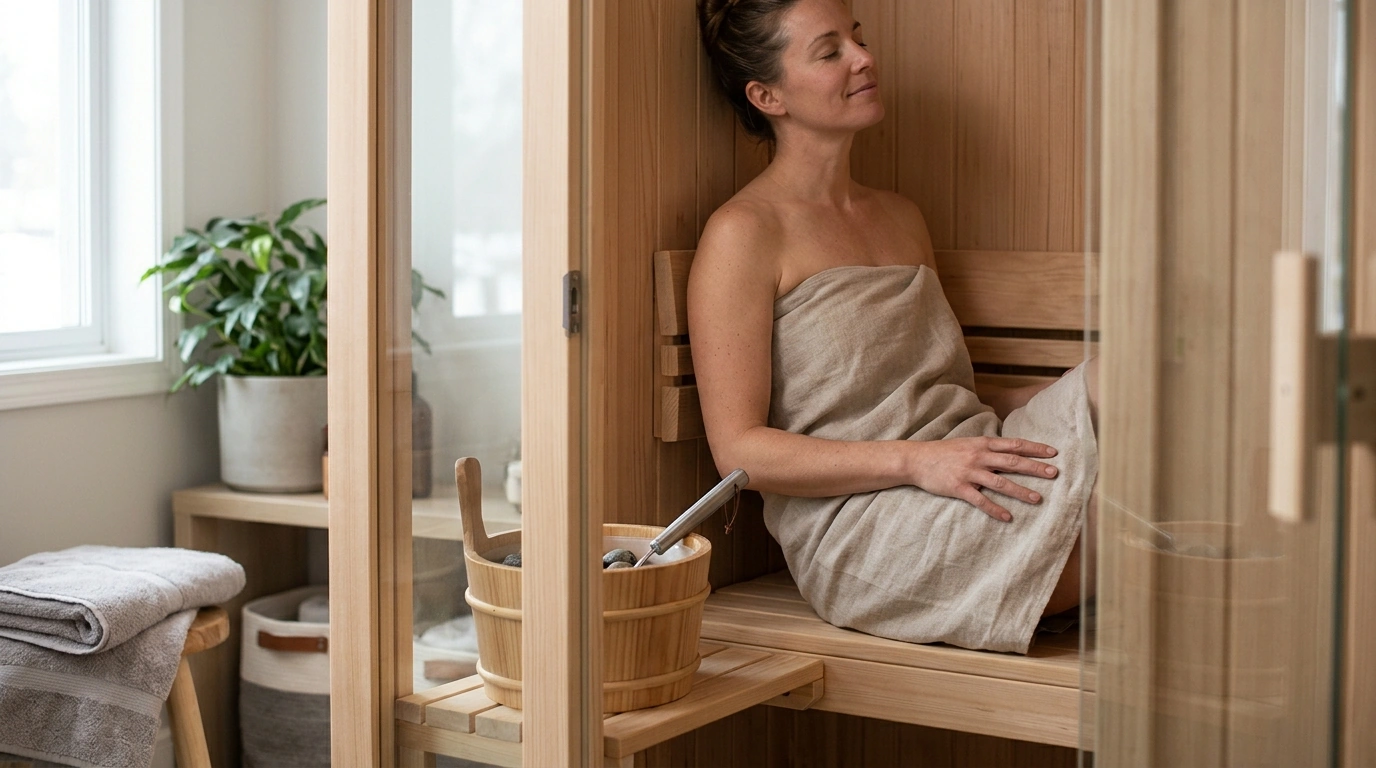
What is the best indoor sauna for one person?
For most people, the best indoor sauna for one person is a compact, enclosed infrared cabin with enough room to sit comfortably, straightforward temperature controls, and electrical requirements that suit the intended room. It offers a dedicated personal space without the footprint of a multi-person sauna. If you want the hotter air, steam, and ritual of pouring water over stones, a traditional electric sauna is the better choice for you.
Choose the heat experience first
Infrared and traditional saunas feel different. Infrared heaters warm your body more directly, while a traditional heater warms the air and sauna stones. Choose based on the experience you will actually use, rather than treating a higher advertised temperature as an automatic upgrade. If steam is important to you, select a traditional model designed for adding water to its stones; do not pour water onto infrared components.
What should you look for in a one-person cabin?
Start with the interior, not just the outside dimensions. You should be able to sit upright, shift position, and enter and exit without squeezing past the door. A comfortable bench matters more than a long list of extras. Then measure the full footprint, including the space needed to open the door and meet the manufacturer’s clearance and ventilation requirements.
Match the sauna’s voltage, circuit, and plug or hardwiring requirements to your home before choosing a model. Some cabins use a standard outlet, while others need a dedicated circuit or professional installation. Our team also recommends prioritizing clear controls, a timer, a stable door, and materials intended for repeated heat exposure. Interior lighting or audio can be pleasant, but neither makes up for a cramped cabin or an unsuitable electrical setup.
Make the final choice around your room
A compact infrared cabin is our practical starting point for a bedroom-adjacent space, home gym, or other suitable indoor room where you want a simple solo routine. Choose a traditional electric sauna instead if its heat style is your priority and your space can accommodate its installation needs. In either case, place the unit on an appropriate level surface, keep required clearances open, and follow its operating instructions. Leave promptly if you feel dizzy or unwell, and ask a healthcare professional about sauna use if you have a condition that could affect your heat tolerance.
For a broader comparison of features and formats, return to our guide to the best indoor sauna for one person.
FAQ
Can you put an indoor sauna in any room?
No. The room needs enough space for the sauna’s required clearances and ventilation, an appropriate level surface, and a compatible electrical setup. Follow the installation requirements for the specific model you choose.









Leave a comment